
7 Marketing Workflow Automation AI Agent Strategies (2026)
 Petric Manurung·15 May 2026·17 min read
Table of Contents
Why Marketing Workflow Automation AI Agents Are Essential in 2026
An AI agent in marketing isn’t a chatbot that follows a script. It’s an autonomous software system that perceives its environment, makes decisions, and executes actions to hit specific goals without a human pulling the strings. Think of it less like a tool you operate and more like a colleague you brief in the morning.
That distinction matters because the industry has already moved past simple rule-based automation. If-this-then-that logic got you email sequences and basic social posting. But in 2025, AI agents advanced from simple automation to becoming a strategic, intelligent workforce capable of architecting entire go-to-market strategies. They don’t just execute tasks—they decide which tasks matter and in what order.
The numbers explain why this shift is urgent. McKinsey estimates that agentic AI will power as much as two-thirds of current marketing activities, from automated content generation to synthetic audience testing and media planning. That’s not a future projection—it’s a 2026 reality. Organizations that implement these workflows can expect agentic AI will power as much as two-thirds of current marketing activities. Meanwhile, the AI agents advanced from simple automation to becoming a strategic, intelligent workforce, with AI-powered tools leading the expansion. More tools means more complexity, and more complexity demands smarter orchestration.
You’re probably already seeing this in your own habits. Daily AI usage among desk workers rose 233% in six months—and those using it daily report being 64% more productive and 81% more satisfied with their jobs. It’s not a fringe trend. 97% of marketing leaders say AI proficiency is vital for proper job performance, according to the 2025 Sprout Social Index. By 2023, 35% of organizations had already adopted AI agents, with another 44% planning to deploy them shortly.
For Singapore businesses, this isn’t abstract. The government’s SMEs Go Digital initiative has already pushed adoption forward, and the competitive landscape rewards teams that move faster. If you’re still treating AI as a novelty rather than a core workflow component, you’re falling behind teams that have already set up multiple AI agents to handle repetitive tasks while their human staff focus on strategy.
This guide exists to bridge that gap. We’ll cover practical strategies for implementing AI agents in your marketing workflow—not theory, but the actual setup, integration, and maintenance that makes them work. You’ll learn how to move from fragmented tools to a coordinated agentic system that handles the grunt work so your team can do what actually grows the company.
How to Automate Content Creation with AI Agents
The case for AI agents in marketing isn’t theoretical anymore. When McKinsey ran content creation pilots, agentic systems increased the speed of the end-to-end process by four times compared to traditional workflows. That’s not a marginal improvement—it’s the difference between launching a campaign in a week versus a month.
Here’s how that speed translates into actual content. AI agents can generate blog posts, social media copy, and ad creatives from a single strategic brief. Instead of your team spending hours on research, drafting, and revision loops, the agent handles the heavy lifting. You review, refine, and approve. The same McKinsey research found that organizations implementing agentic workflows can expect 10 to 30 percent revenue growth from hyperpersonalized marketing—because speed lets you tailor content to specific audience segments at scale.
The numbers get more interesting when you look at what small changes can do. Sephora tested a 22-word copy change optimized by AI and saw a 62% conversion uplift. That’s not a redesign or a new campaign—that’s a single sentence. When you can run those experiments continuously instead of once a quarter, the compounding effect is enormous.
Good Bards, a Singapore-based AI Marketing OS backed by Google, Meta, HP, and SMU, executed an entire campaign in three hours. From brief to published assets, their AI handled the workflow. That kind of turnaround used to require a full agency team working overtime. Now it’s a morning’s work.
Where the Real Work Happens
Here’s what surprises most teams: 35% of organizations had already adopted AI agents—not prompt engineering. The actual content generation is the easy part. The hard part is connecting your AI agent to the tools you already use.
Platforms like HubSpot now offer Breeze AI agents that integrate directly with your CRM, automating email personalization and campaign triggers. StoryChief’s William AI Content Agent handles calendar creation and campaign management. Jasper’s Content Pipelines move content from idea to publication without manual handoffs. The key is choosing tools that talk to each other rather than building another disconnected system.
Function Growth agency’s case study shows that marketing teams can reallocate up to 30% of their time toward strategic initiatives when AI automation is implemented. That’s nearly a third of your team’s capacity freed up for work that actually grows the business.
For teams just starting out, understanding the fundamentals of workflow automation AI agents is the logical first step before diving into platform-specific setups.
SEO Automation Workflows: AI Agents for Keyword Tracking and Optimization
You’ve just published a piece of content. Now you need people to actually find it. That’s where SEO automation comes in—and AI agents are making it a lot less painful than the days of manually checking keyword rankings in a spreadsheet.
What SEO Agents Actually Do
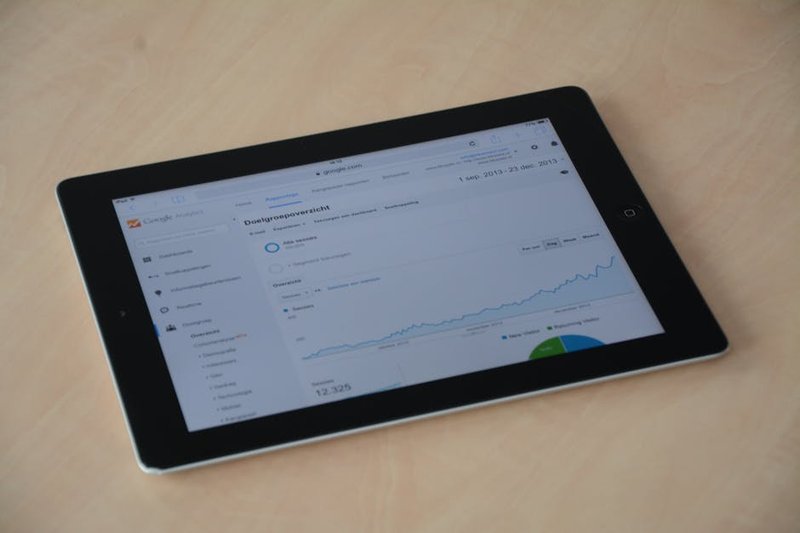
Think of an SEO agent as your dedicated rank tracker that never sleeps. It monitors your keyword positions daily, watches what your competitors are ranking for, and flags content gaps before they become problems. Tools like Semrush have already baked this into their platform with an AI Visibility Index that tracks brand mentions across ChatGPT, Gemini, and Perplexity—because search isn’t just Google anymore. For teams that need to pull data from dozens of sources, platforms like Improvado automate extraction from 500+ marketing channels and feed everything into a single dashboard where AI agents handle the analysis.
The results speak for themselves. Shopee Singapore ran AI-optimized search campaigns and saw 2x orders with a 49% higher ROI. That’s not a marginal improvement—it’s the difference between a campaign that works and one that transforms your bottom line.
The 80% Reality Check
Here’s what nobody tells you about setting up these agents: the actual AI model work is the easy part. According to MIT Sloan, 80% of AI agent implementation work goes into data engineering, stakeholder alignment, governance, and workflow integration. The prompt engineering? That’s the remaining 20%. If you’re planning to roll out SEO automation, budget your time accordingly—or better yet, work with someone who’s already done the heavy lifting. A guide to AI-driven workflow automation in Singapore can help you navigate the integration side without reinventing the wheel.
The Closed-Loop System
This is where the magic happens. Your SEO agent identifies a content gap—say, “best workflow automation tools for SMBs 2026” is trending but you have nothing published. That insight gets passed directly to your content creation agent, which drafts the article, optimizes it for the target keyword, and schedules publication. The SEO agent then monitors the post’s performance and feeds ranking data back to refine future content.
McKinsey estimates that agentic AI will power as much as two-thirds of current marketing activities, enabling automated content generation and audience-based media planning. Organizations that adopt these workflows can expect agentic AI will power as much as two-thirds of current marketing activities. The loop isn’t just efficient—it’s compounding.
The content you create and the SEO that surfaces it are no longer separate functions. They’re two agents in the same system, talking to each other, making each other smarter. That’s the workflow worth automating.
Social Media Scheduling and Personalization at Scale
The same SEO workflows that track keywords can also monitor social conversations, trending topics, and competitor posts—feeding that intelligence directly into your content calendar. But the real leap comes when you let AI agents handle the scheduling, generation, and personalization across platforms without a human touching each post.
From Calendar Management to Autonomous Publishing
Sprout Social already uses AI to recommend optimal posting times based on when your audience is actually scrolling. An agent takes this further: it drafts post variations, checks them against your brand guidelines, and drops them into a queue. When a trending topic breaks, it can pull from your existing content library, remix the angle, and schedule a response within minutes. In content creation pilots, agentic systems increased the speed of the end-to-end process by four times compared to traditional workflows.
Blaze.ai automates the repurposing side—turning a single blog post into LinkedIn carousels, Twitter threads, and Instagram captions. Klaviyo bridges the gap between email and social, letting agents personalize messages across channels based on the same customer data. The result? McKinsey estimates organizations can expect 10 to 30 percent revenue growth from hyperpersonalized marketing when agentic workflows are in place.
A/B Testing Without the Manual Grind
You don’t need to run split tests manually anymore. Relevance AI offers agents that schedule multiple post variations, track engagement metrics, and automatically adjust the content mix based on what’s working. The agent learns which headlines drive clicks at 9 AM versus 7 PM and shifts the calendar accordingly. That’s the kind of optimization that compounds over weeks, not months.
The Compliance Safety Net
One concern with automated posting is brand risk. An agent can scan every draft for flagged terms, competitor mentions, or regulatory red flags before it goes live. If a post fails the check, it gets quarantined and flagged for human review. This is where the 80% rule becomes visible: 80% of AI agent implementation work goes into data engineering, stakeholder alignment, governance, and workflow integration—not the fancy prompt engineering. The compliance layer is part of that heavy lifting.
Where the Time Goes
Function Growth Agency’s case study shows that marketing teams can reallocate up to 30% of their time toward strategic initiatives when AI automation handles the repetitive publishing cycle. That’s not theoretical—it’s hours recovered per week per team member. If you’re still manually scheduling each Instagram story and Twitter reply, you’re burning time that could go toward campaign strategy or creative development.
For teams just starting out, a beginner’s guide to workflow automation AI agents can help map which social tasks are ripe for delegation. The pattern is consistent: let the agent handle the rhythm, and keep your team focused on the message.

Email Personalization and A/B Testing with AI Agents
The same logic that lets AI agents schedule your social posts applies to email—but with higher stakes. Email lives or dies on timing, relevance, and subject lines that actually get opened. Get it wrong, and you’re in the spam folder. Get it right, and you’re looking at agentic AI will power as much as two-thirds of current marketing activities, according to McKinsey’s 2025 analysis of agentic workflows.
Personalization at Machine Speed
Here’s what an AI agent handling your email looks like: it pulls customer data from your CRM, writes subject lines tailored to each recipient’s behavior, adjusts body content based on past purchases or browsing history, and chooses send times optimized for when that specific person actually opens emails. Lyne.ai does exactly this—its agents can produce 100 personalized emails per hour compared to 10 manually. That’s a 10x speed improvement without sacrificing the personal touch that drives conversions.
The agent doesn’t stop at one channel either. When it’s connected to platforms like Salesforce and Klaviyo, it builds unified customer profiles that span email, social media, and web behavior. So if someone clicked your Instagram ad but didn’t buy, the email they receive the next day acknowledges that interaction. Cross-channel personalization that actually feels connected, not creepy.
Smarter Testing, Less Guesswork
A/B testing has always been the gold standard for email optimization, but traditional methods waste time. You set up two variants, wait for statistical significance, pick a winner, and start over. AI agents flip this entirely. Amma App deployed a multi-armed bandit algorithm that dynamically allocates traffic to winning variants in real time—no waiting, no manual analysis. The result? A 12% increase in customer retention.
BUGECE took a different approach with Braze AI, focusing on send-time optimization. The agent analyzed when each subscriber was most likely to engage and scheduled deliveries accordingly. Open rates climbed because the emails arrived when recipients were actually looking at their phones, not buried in their morning inbox.
The Integration Reality Check
Here’s the catch—and it’s a big one. MIT Sloan research found that 80% of AI agent implementation work goes into data engineering, stakeholder alignment, and workflow integration, not the AI itself. Getting your email agent to talk properly with Salesforce or Klaviyo requires clean data pipelines and aligned teams. But once that foundation is in place, the payoff compounds. Marketing teams using AI automation can reallocate up to 30% of their time toward strategic initiatives, according to a Function Growth agency case study.

If you’re just starting to think about connecting your email tools with AI agents, the best workflow automation AI agents for 2026 list is a solid place to evaluate your options. The key is starting with clean data and clear goals—the AI handles the rest.
Frequently Asked Questions About Marketing Workflow Automation AI Agents
You’ve seen how AI agents handle email personalization and A/B testing. But when you start planning your own implementation, specific questions tend to surface. Here’s what most teams actually ask.
Content calendars and social posting
AI agents can manage your entire content calendar. You feed them your strategy, brand guidelines, and key dates, and they plan, generate, and schedule posts across platforms. For social post generation specifically, agents work from content briefs to produce on-brand copy that matches your voice. Shopee, for example, uses AI to optimize search campaigns — achieving 2x orders and 49% higher ROI in Singapore — which shows how well localised AI content performs.
Testing and competitive tracking
For A/B testing, agents run multivariate experiments automatically. They don’t just run the tests — they allocate traffic to winning variations in real time. On the competitive side, agents monitor competitor keywords continuously and flag opportunities you’d miss manually. If you’re just getting started, a workflow automation AI agent for beginners guide can walk you through the setup.
Personalisation and quality at scale
Email personalisation at scale is where agents truly shine. They pull customer data — purchase history, browsing behaviour, engagement patterns — and tailor every email individually. No more segment-based batch-and-blast. For quality, agents review grammar, tone, and brand consistency before anything goes live. They catch the inconsistencies that slip past human editors.
Integration and compliance
You’re probably wondering about your existing stack. Many agents offer native integrations with platforms like HubSpot, or expose APIs for custom connections. For analytics, agents pull data from multiple sources — Google Analytics, social platforms, CRM — and generate consolidated reports automatically.
On compliance, agents can be trained to flag regulatory issues. They scan content against your compliance rules before publishing. This matters especially in regulated industries where one off-brand claim creates real liability.
The Singapore context
Here’s what’s specific to Singapore. The government’s SMEs Go Digital initiative supports AI adoption, and local agents can analyse market data with cultural nuance. They understand public holiday calendars, local shopping patterns like 11.11 and 9.9, and the multilingual landscape. That’s why Shopee’s AI campaigns work so well here — the technology accounts for local context.
What implementation actually looks like
One stat worth noting: 80% of AI agent implementation work goes into data engineering, stakeholder alignment, governance, and workflow integration — not prompt engineering. The actual AI configuration is the easy part. The hard work is getting your data clean, your processes documented, and your team aligned. Plan for that upfront, and the agent setup itself will feel surprisingly straightforward.
Conclusion: Build Your AI Workforce Today
The questions you’ve asked—about ROI, implementation timelines, and choosing the right tools—point to a single truth: the shift from simple automation to a strategic, intelligent workforce capable of executing high-impact go-to-market strategies isn’t theoretical anymore. It’s happening now, and it’s delivering real results. The data backs this up: organizations implementing agentic workflows in marketing can expect agentic AI will power as much as two-thirds of current marketing activities. That’s not a minor efficiency gain; that’s a fundamental change in how marketing drives business value.
But here’s the catch—this isn’t just about writing better prompts. The real unlock is integration. Connecting your AI agents to your CRM, your analytics, your content management systems. That’s where the magic happens, and that’s where most teams get stuck. With 97% of marketing leaders say AI proficiency is vital for proper job performance, the pressure is on to get this right.
That’s where we come in. We don’t just hand you a chatbot and wish you luck. We set up your AI workforce—configured, connected, and running—in days, not months. No endless prompt engineering. No wrestling with API documentation. Just a team of specialized agents that actually do the work.
Your next step is straightforward: implement your first marketing agent with our templates. Pick a workflow—content generation, lead scoring, campaign optimization—and watch it run.
The future of marketing automation isn’t about replacing your team. It’s about giving them a workforce that never sleeps, never forgets, and keeps scaling. The question isn’t whether AI agents will transform your marketing. It’s whether you’ll be the one leading that transformation.
About Petric Manurung
Petric Manurung is the Founder & CEO of FiveAgents IO, building AI agent systems and automation that help businesses eliminate manual work at scale. Before starting FiveAgents IO, he spent 20+ years inside global enterprises — Lufthansa Systems, Apple, Toll Group, CEVA Logistics — which gives him an unusually clear view of where human effort gets wasted and where AI agents can take over.
He holds an MBA from Western Michigan University and a HubSpot SEO Certification. His expertise spans AI agent architecture, workflow automation, and SEO optimization — all areas where he ships production systems, not just strategies.
Sources & References
This article incorporates information and insights from the following verified sources:
[1] AI agents advanced from simple automation to becoming a strategic, intelligent workforce – Demand Gen Report (2025)
[2] agentic AI will power as much as two-thirds of current marketing activities – McKinsey (2026)
[3] marketing teams can reallocate up to 30% of their time toward strategic initiatives – Improvado (2026)
[4] 97% of marketing leaders say AI proficiency is vital for proper job performance – Sprout Social (2025)
[5] 35% of organizations had already adopted AI agents – MIT Sloan (2026)
[6] The Ultimate Guide to AI Marketing in Singapore – Hamilton Sherwind (2025)
[7] Content Calendar Automation AI Agents – Relevance AI (2025)
[8] AI A/B Testing: Complete Guide & Tools – Nutshell (2026)
[9] 7 Ways to Use AI for A/B Testing: An In-Depth Guide – HubSpot (2024)
[10] Automate Multi-Platform Social Media Content Creation with AI – n8n (2025)
[11] Email Personalization: Using AI to Power Your Sales Outreach – Relevance AI (2025)
[12] The Future of Email Marketing: AI-Driven Personalization at Scale – Octave HQ (2025)
[13] AI-driven email personalization strategies that actually work – HubSpot (2026)
[14] 10 Digital Marketing Trends Singapore SMEs Cannot Ignore in 2026 – Best Marketing Singapore (2026)
[15] The Best AI Marketing Automation Tools in Singapore – Good Bards (2026)
[16] HubSpot + AI Agents: Automate Your Entire Marketing Funnel – MindStudio (2026)
[17] K:AI for Workflow Automation in Marketing & Service – Klaviyo (2026)
[18] 15 Best Keyword Tracking Tools For 2026: AI & Pixel Rank – Yotpo (2026)
[19] 5 Ways to Make AI A/B Testing Work for You – Klaviyo (2024)
[20] Lyne.ai – A.I. Powered Sales Personalization at Scale – Lyne.ai (2025)
[21] Internal: set up multiple AI agents to handle repetitive tasks – https://www.fiveagents.io/intelligence/workflow-automation-ai-agent-roi-singapore
[22] Internal: understanding the fundamentals of workflow automation AI agents – https://www.fiveagents.io/intelligence/workflow-automation-ai-agent-beginners
[23] Internal: guide to AI-driven workflow automation in Singapore – https://www.fiveagents.io/intelligence/ai-driven-workflow-automation-singapore
[24] Internal: best workflow automation AI agents for 2026 – https://www.fiveagents.io/intelligence/best-workflow-automation-ai-agents-2026
[25] Internal: implement your first marketing agent with our templates – https://www.fiveagents.io/intelligence/how-to-build-workflow-automation-ai-agent
All external sources were accessed and verified at the time of publication. This content is provided for informational purposes and represents a synthesis of the referenced materials.
Put this into practice
We build the custom application and the AI agents inside it that take on the work behind articles like this. You see a demo first, then pay as each milestone is met.
Related Articles



Comments
Leave a comment
Your comment will be reviewed before it appears here.